
Biodiversity in Bali’s Rainforest: The Living Tapestry of an Island Ecosystem

Bali is known for its beaches, temples and rice terraces, but hidden behind the tourist routes lies one of the most threatened rainforest ecosystems in Southeast Asia.
Its biodiversity is not just a scientific concept; it’s the living fabric that keeps forests breathing, rivers flowing and communities thriving.
And today, that fabric is fraying faster than most people realize.
Bali sits within the Wallacea region, a biogeographical transition zone between Asian and Australian fauna.
This makes the island home to species found nowhere else on Earth, such as the Balinese langur and the critically endangered Bali starling.
When biodiversity disappears here, it disappears globally, making Bali’s ecosystems uniquely valuable and uniquely vulnerable.
Biodiversity in Bali’s Rainforest
Biodiversity is often misunderstood as simply “many species”, but it’s far more complex.
It includes genetic variation within species, the richness of species across habitats and the diversity of ecosystems such as montane forests, mangroves, volcanic slopes and sacred groves.
It also encompasses functional diversity: the ecological roles species play, from pollination and seed dispersal to decomposition and nutrient cycling.
Research from the Bedugul highlands shows how sensitive this diversity is.

On Mt. Pohen, a forest frequently disturbed by fire and human activity, pioneer species like Macaranga dominate. Meanwhile, the nearby Mt. Tapak, which has experienced less disturbance, supports shade-tolerant climax species such as Lithocarpus.
This demonstrates that biodiversity is not just about how many species exist, but which ecological functions they fulfill and how disturbance reshapes those functions.
Why Biodiversity Matters
Biodiversity is the foundation of Bali’s ecological stability.

Fruit-eating mammals, birds and reptiles disperse seeds that allow forests to regenerate. Civet cats, for example, disperse seeds of more than 50 tree species, including Palaquium, Syzygium and Ficus.
Without these animals seeds fall close to the parent tree, where they receive less light and face higher predation. Forest recovery slows dramatically, sometimes by years.
Macrofungi play a crucial role in nutrient cycling. In the forests of Badung, mycorrhizal fungi provide up to 80% of phosphorus uptake for young trees. On Bali’s nutrient-poor volcanic soils, this means many seedlings simply cannot survive without fungal support.
Diverse forests store more carbon and recover faster from storms, droughts and fires, which is essential for Bali’s steep volcanic slopes.

Biodiversity also has cultural significance: sacred groves protected by local communities maintain species richness comparable to national parks.
These forests show how cultural stewardship and ecological conservation reinforce one another.
Indicator species such as reptiles and amphibians in West Bali National Park offer early warnings about ecosystem health. Their decline often signals deeper ecological problems long before they become visible in the forest canopy.
How Biodiversity Is Being Lost
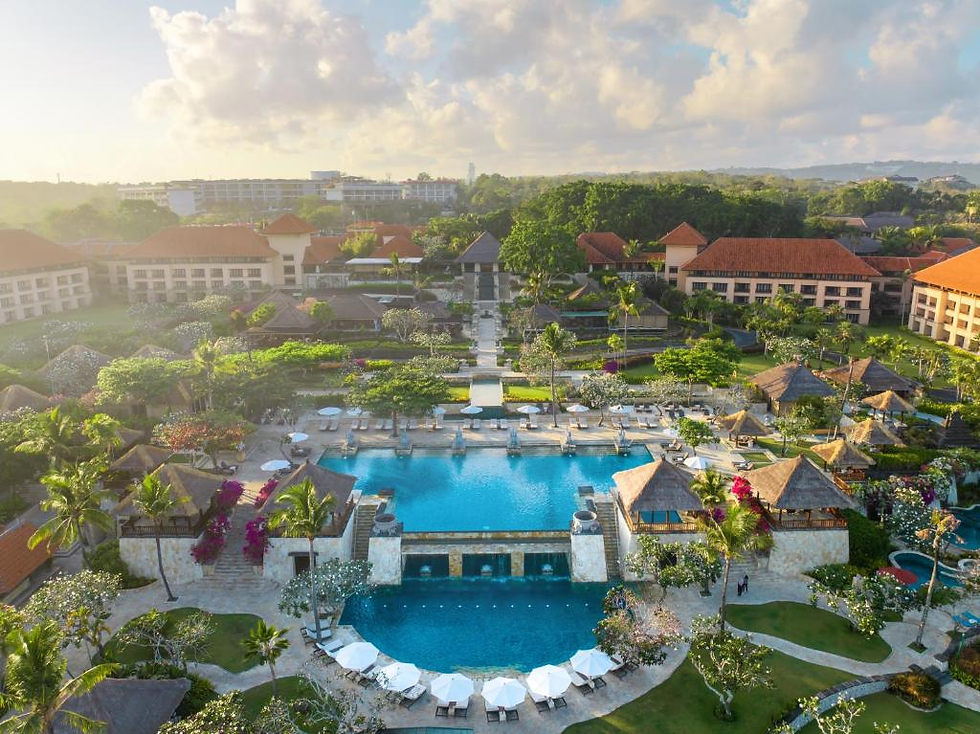
Despite its beauty, Bali’s rainforests are shrinking, and with it the species that keep it alive.
Over the past 30 years, Bali is has lost more than 20% of its natural forest cover and almost 75% of its biodiversity, largely due to tourism development and agricultural expansion.
In regions like Baturiti, forests have been fragmented into patches smaller than five hectares, which is too small to support large mammals or birds of prey.
Roads divide habitats, isolating wildlife populations.

Illegal wildlife trade removes birds, reptiles, amphibians and small mammals from the ecosystem. The Bali starling nearly went extinct after more than 90% of its wild population was captured for the pet trade, with cascading effects on insect control and seed dispersal.
Climate change alters rainfall patterns and temperatures, forcing species uphill or out of their habitats.
Invasive species such as free-roaming cats and dogs prey on native wildlife.
And as pollinators, seed dispersers and fungal networks decline, the forests lose their ability to regenerate naturally.
The Bedugul study we talked about earlier shows that disturbed forests like Mt. Pohen have dramatically altered species compositions compared to less disturbed forests like Mt. Tapak. A clear sign of biodiversity decline.
Examples of Bali’s Biodiversity
The East Javan langur plays a vital role in seed dispersal. These primates feed on young leaves and fruits, moving quickly through the canopy and spreading seeds across large distances. Their presence is essential for the recovery of high-elevation forests.

Flying foxes are nocturnal pollinators capable of traveling more than 40 kilometers in a single night. By carrying pollen and seeds between isolated forest fragments, they connect ecosystems that would otherwise remain ecologically separated. Without them trees such as durian, rambutan, Ficus and many mangrove species struggle to reproduce.
Macrofungi serve as indicators of forest health: in the Badung study, researchers documented more than 60 species, some of which occur only in undisturbed forests.
Biodiversity and Forest Regeneration
Restoring Bali’s rainforest means restoring ecological relationships. Tree planting alone is not enough.
In many restoration sites, young trees survive but the forest remains ecologically “silent” without seed dispersers, pollinators and fungal networks.
Natural regeneration only resumes when civet cats, flying foxes and birds return.

Sacred groves demonstrate that restoration must also be culturally grounded. Local communities have protected these forests for generations and research shows they are just as biodiverse as officially protected areas.
When biodiversity returns, forests regain their resilience, productivity and ability to heal.
A Path Forward
Biodiversity loss is not inevitable.
Protecting Bali’s rainforest requires preserving remaining forest fragments, supporting community-based conservation, reducing wildlife trade, practicing responsible tourism, restoring degraded land with native species, and monitoring indicator species.
In villages such as Jatiluwih and Munduk, local communities collaborate with researchers to monitor forest fragments.
They, for example, count birds, photograph flying foxes and document macrofungi.
These citizen science projects provide crucial data for protecting biodiversity.
Every species protected is a thread rewoven into the forest’s tapestry.
Conclusion
Biodiversity is the rainforest’s immune system.
When species disappear, the forest loses its ability to heal, adapt and survive.
A rainforest without biodiversity is like a temple without pillars: it may still stand, but not for long.
By protecting the species that hold the forest together, we protect the future of Bali itself.
References
Amarasinghe, A.A.T., Putra, C.A., Henkanaththegedara, S.M., Dwiyahreni, I.A., Winarni, N.L., Sunaryo, Margules, C., Supriatna, J. (2021). Herpetofaunal diversity of West Bali National Park, Indonesia with identification of indicator species for long-term monitoring. Global Ecology and Conservation, 28, e01638. https://doi.org/10.1016/j.gecco.2021.e01638
Atmaja, M.B., Sutomo, Humaida, N., Pujiono, E., Saputra, M.H., Sukmawati, J.G., Hani, A., Iryadi, R., Herningtyas, W., Hadiyan, Y., Januar, H.I., Hidayah, I. (2025). The Phytosiocology of Tree Communities on Two Mounts in Bedugal Highland Tropical Forest, Bali, Indonesia. Media Konservasi, 30 (2) 213-221. https://doi.org/10.29244/medkon.30.2.213
Dewi, N.N.S.K., Gari, N.M., Yuni, L.P.E.K., Wijaya, I.M.S. (2026). Species Composition of Macrofungi in Various Ecosystems in Badung Regency, Bali. Advances in Tropical Biodiversity and Environmental Sciences, 10(2), 72-82. https://doi.org/10.24843/ATBES.2026.v10.i02.p02
Undaharta, N.K.E., Martini, F., Wee, A.K.S. (2023). Comparable species diversity and forest structure between sacred groves and protected forests reveal high conservation value of customary forests in Bali, Indonesia. Biodiversity and Conservation, version 1. https://doi.org/10.21203/rs.3.rs-3669800/v1

Comments